

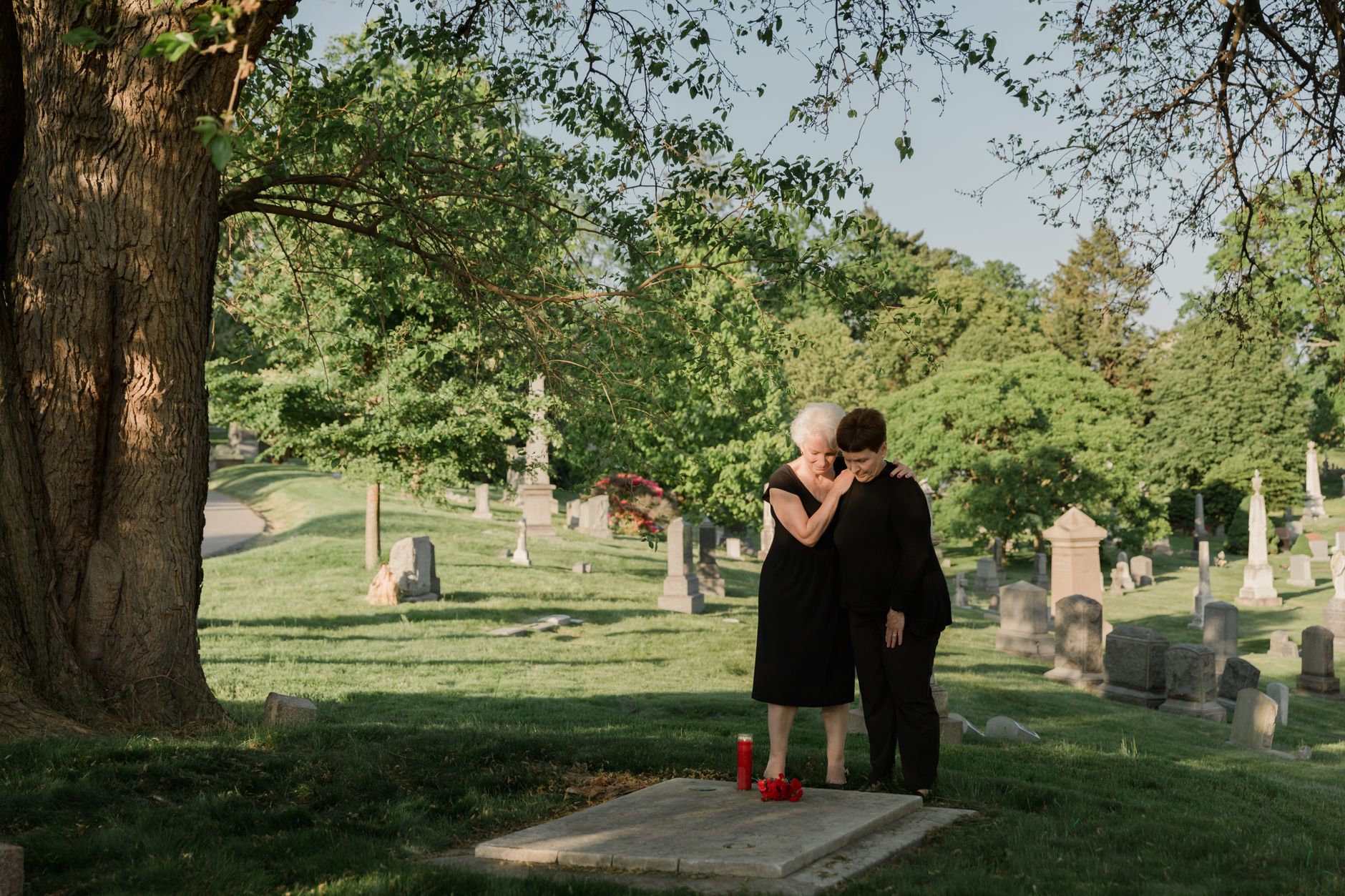
A shared headstone asks a family to make two kinds of decisions at once. It has to recognize a relationship, and it has to leave room for each person to be remembered individually. That balance can become especially sensitive when one person is still living and taking part in the design.
The familiar arrangement of a shared surname above two sets of names and dates is one possibility. It is not the only one. Different surnames, unequal name lengths, individual beliefs, and future engraving can all influence the layout. Starting with those realities produces a more useful design than trying to fit everyone into a standard example.
A companion memorial also needs a practical plan that extends beyond the first installation. Who will arrange the later inscription? Where will the original drawing be kept? Which details are settled now, and which should remain open? Answering these questions gives the family a clearer basis for choosing the stone and approving the design.
Confirm the burial arrangement before designing the face
Begin with the cemetery records. Ask the office to confirm the relevant spaces, the permitted location of a shared monument, and the requirements for its complete footprint. Do not assume that two adjacent graves automatically permit a wider base or a particular installation position.
Provide the supplier with the cemetery’s written requirements and a location reference. If the cemetery uses a plot diagram, keep a copy with the order. The maker needs to know what will fit, while the family needs to know which place the monument is intended to identify.
Discuss the arrangement if one person’s remains will be elsewhere or if the memorial will commemorate someone who is not buried at that location. Ask the cemetery what wording and permissions it requires. A design can acknowledge a relationship without leaving future visitors with an inaccurate understanding of the burial site.
These questions may feel less personal than choosing an inscription, but they protect the personal work that follows. A beautiful proof is only useful if it describes an arrangement the cemetery will accept and the family understands.
Allow each person a voice in the design
When one partner is living, ask how much they want to decide now. Some people want their name and preferred wording included immediately. Others are comfortable choosing the overall form but would rather leave their own inscription for later. Neither preference needs to be treated as reluctance or a failure to plan.
Use separate questions for the shared and individual elements. What belongs to the relationship? What belongs to each person? A shared phrase might sit beneath two individual name panels, while a small emblem can recognize a particular interest or faith on one side.
Avoid making one person’s side visually secondary simply because it will be completed later. The space can be planned from the beginning even when some information remains blank. Ask the designer to show both the initial appearance and the intended completed layout.
If the living person prefers to leave most decisions open, record only what they are ready to approve. A dated note saying that future wording has not been chosen is more useful than relatives assuming that the first proof represents every final preference.
Choose the proportions around the actual names
Name length changes a design. One person may have a short first name and surname; the other may use several names or a different surname altogether. Equal-sized panels do not always produce equally readable inscriptions when the amount of text differs.
Supply the full proposed wording before deciding how wide each area should be. Ask the designer to try different line breaks and spacing while keeping the overall balance. The goal is a harmonious face with clear names, rather than mathematical symmetry at any cost.
Looking through Upright Headstones can help a family compare how wider tablets accommodate separate name areas and shared details. Use those examples to discuss proportions, then have the actual names placed into a proof. A sample with two short names can make a layout look more spacious than your own inscription will be.
Consider the shared surname carefully. It may be appropriate, unnecessary, or misleading depending on the people being commemorated. A design can express a close relationship through alignment, spacing, or a common detail without requiring both people to use the same name.
Reserve future space with a complete drawing
Leaving a blank area is only the beginning of planning for another inscription. The future letters need a defined place, a suitable size, and enough room for the intended information. Ask the maker to prepare a drawing that shows the anticipated completed design without inventing unknown dates.
Mark the future areas clearly in the records. A family can note that a date line remains open, that an epitaph is undecided, or that a particular emblem has already been chosen. Those distinctions prevent blank space from being mistaken for an omission.
Discuss how a later inscription would be carried out. Ask whether the original supplier offers that work in the cemetery’s area, whether a local engraver would be needed, and what permissions might be required. Availability and pricing can change, so keep the answer as a planning record rather than a permanent guarantee.
If a package includes later engraving, request the terms in writing. Clarify the covered wording, location, timing conditions, and any separate service charge. The family should understand exactly what has been paid for and what will still need to be arranged.
Make shared wording broad enough for both lives
A phrase about the relationship can bring the design together, but it should fit both people comfortably. Read it separately against each person’s name. If it seems to describe only one, it might belong in an individual inscription instead.
Dates associated with the relationship deserve the same care as birth and death dates. Decide whether a wedding date, anniversary, or another shared milestone belongs on the memorial. Verify it from a reliable family record and consider how visitors will recognize what the date means.
Different religious or cultural traditions may need more than a generic symbol placed in the middle. Ask each person or their close family what is appropriate. The designer can explore separate symbols, a neutral shared image, or a text-led arrangement if that better reflects the relationship.
A modest amount of wording often leaves more room for individual details. There is no need to add a long account of the marriage or partnership. The relationship can be recognizable through a short inscription and the way the two names sit together.
Think through flowers and other additions
Vases can affect both the footprint and the visual balance of a companion monument. Ask where they sit in relation to the tablet, how they are attached, and whether their position is allowed at the grave. Review the arrangement with and without flowers.
Two matching vases may suit a symmetrical design, but the family does not need to choose them solely to create a pair. Consider who will bring flowers, how often, and whether the cemetery has seasonal restrictions. The useful choice is the one that fits actual visits.
Leave room for access around the approved installation. Ask the cemetery and installer to address placement rather than trying to solve site measurements from a photograph. Decorations should not become the reason a name or smaller inscription is difficult to see.
If relatives expect to add personal objects later, check those ideas now. A favorite ornament may have meaning at home while being unsuitable under the cemetery’s rules. Knowing the limits gives the family time to incorporate that meaning into an approved design element instead.
Review the two sides together and separately
Proofreading a companion headstone requires more than comparing the overall appearance. Review each person’s information on its own, then examine the relationship between the two sides. Similar names or dates can make copying errors harder to notice.
Use one source sheet for each person. Check the full name, punctuation, date format, and any title or nickname. Then review common elements such as the shared surname and relationship date. Ask another family member to make an independent pass before the final approval.
Check that revisions on one side have not unintentionally altered the other. A longer line may cause the designer to adjust both panels, which can change the lettering size or spacing. Ask for a complete revised proof after substantial edits, rather than approving a cropped image of the changed section.
Keep the final drawing, the written specification, and the approval together. If a future engraver needs to match the design, the original font information and measurements will be more useful than a casual photograph taken from an angle.
Leave a clear plan for the next family member
Create a short record naming the supplier, cemetery contact, monument location, and the person who holds the paperwork. Include the status of future engraving and any unfinished design decisions. Tell at least one other relative where this information is stored.
Revisit the plan if the living person’s preferences change. A note can be updated while an uncarved area remains open. If changes would affect existing lettering or the monument itself, ask the supplier and cemetery what is feasible before assuming the design can be altered.
When the first installation is complete, take a clear photograph and check it against the approved proof. Keep that image with the planned completed layout so the distinction between the present appearance and future work remains obvious.
A companion headstone can hold a shared story without making two lives identical. Its design works best when the names have room, the relationship is expressed honestly, and later decisions have been considered with care. That leaves future relatives with something practical as well as personal: a memorial they understand and a plan they can follow.
