

Introduction
In the fast-paced world of modern manufacturing, CNC machining stands as a cornerstone, shaping everything from aerospace components to medical devices with unmatched precision. But let’s face it: even the most advanced CNC machines can’t escape the headaches of tool wear, unexpected downtime, and rising maintenance costs. Enter smart tooling—a game-changer that’s turning these challenges into opportunities. By embedding sensors into cutting tools and leveraging predictive maintenance, manufacturers are unlocking new levels of efficiency, reliability, and sustainability in CNC machining. In this article, we’ll explore how sensor-embedded tools are revolutionizing CNC machining, why they matter in 2025, and how they’re shaping the future of manufacturing. Buckle up—it’s time to dive into the cutting-edge world of smart CNC machining!
Understanding Smart Tooling: The Role of Sensors in CNC Machining
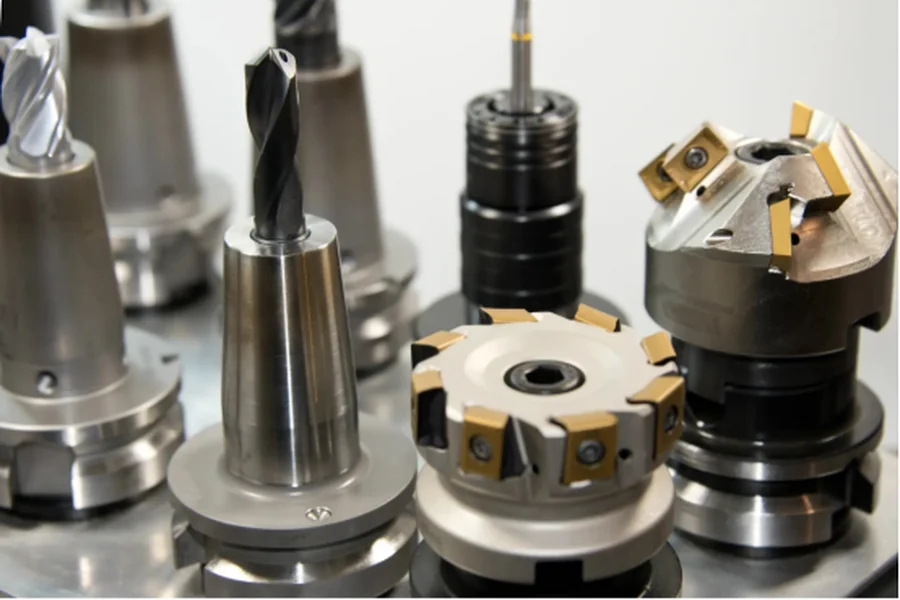
Imagine a CNC machine that not only cuts metal but also thinks about its tools. Smart tooling makes this a reality by embedding sensors—tiny devices like accelerometers, thermocouples, and strain gauges—directly into cutting tools. These sensors monitor critical parameters like vibration, temperature, and cutting force in real time, giving manufacturers a front-row seat to their tool’s health.
In traditional CNC machining, operators rely on experience or scheduled maintenance to decide when to replace tools. But this approach often leads to either premature tool changes (wasting resources) or catastrophic failures (causing costly downtime). Smart tooling flips the script. By collecting real-time data, these intelligent tools provide actionable insights, allowing operators to optimize performance and prevent issues before they spiral.
The technology behind smart tooling is a blend of hardware and software. Sensors feed data to industrial IoT (IIoT) platforms via Bluetooth or Wi-Fi, where AI algorithms analyze patterns to predict tool wear or potential failures. For example, a sudden spike in vibration might signal an impending tool break, prompting the system to adjust cutting parameters or alert the operator. This isn’t just cool tech—it’s a practical solution that’s transforming CNC machining into a smarter, more efficient process.
Techsslaash offers the latest technology updates, in-depth gadget reviews, and expert insights. Discover AI innovations, software tools, and hardware trends shaping the future. With reliable guidance and practical tips, Techsslaash keeps tech enthusiasts informed, inspired, and ready to embrace the digital age.
Table 1: Key Sensors in Smart Tooling for CNC Machining
| Sensor Type | Function | Application in CNC Machining | Accuracy Level | Example Use Case |
| Accelerometer | Measures vibration and shock | Detects tool imbalance or chatter | ±0.01 g | Preventing tool breakage in milling |
| Thermocouple | Monitors tool and workpiece temperature | Prevents overheating during high-speed cutting | ±0.5°C | Titanium alloy machining in aerospace |
| Strain Gauge | Tracks cutting force and stress | Optimizes feed rates for tool longevity | ±0.1% strain | Precision turning of automotive parts |
| Acoustic Sensor | Detects sound anomalies | Identifies early signs of tool wear | 95% detection rate | High-speed drilling in medical devices |
| Pressure Sensor | Monitors coolant or air pressure | Ensures optimal cooling for surface finish | ±0.2 bar | Enhancing tool life in heavy-duty cuts |
Data Source: Compiled from industry reports and tool manufacturer specifications (e.g., Sandvik Coromant, 2025).
Predictive Maintenance: Transforming CNC Machining Efficiency
Let’s talk about downtime—every manufacturer’s worst nightmare. In CNC machining, unplanned machine stoppages due to tool failure can cost thousands of dollars per hour. Predictive maintenance, powered by smart tooling, is here to save the day. Unlike traditional preventive maintenance (which follows a rigid schedule) or reactive maintenance (fixing things after they break), predictive maintenance uses real-time data to anticipate problems.
Here’s how it works: Sensors embedded in CNC tools collect data on vibration, temperature, and force. This data streams to an IIoT platform, where machine learning algorithms analyze trends and predict when a tool is likely to fail. For instance, a gradual increase in cutting force might indicate progressive tool wear, prompting the system to recommend a tool change before a catastrophic failure occurs. This approach slashes downtime, extends tool life, and boosts overall efficiency.
The numbers speak for themselves. According to a 2024 industry report by MarketsandMarkets, predictive maintenance in manufacturing can reduce downtime by up to 50% and increase tool life by 20–40%. For CNC machining shops, this translates to significant cost savings and higher throughput. Plus, it’s a win for sustainability—fewer tool replacements mean less material waste, aligning with 2025’s stringent environmental regulations.
Table 2: Impact of Predictive Maintenance on CNC Machining Operations
| Metric | Traditional Maintenance | Predictive Maintenance | Improvement (%) | Source |
| Downtime (hours/year) | 200–300 | 100–150 | 50% | MarketsandMarkets, 2024 |
| Tool Life (hours) | 100–150 | 120–200 | 20–40% | Sandvik Coromant Case Study |
| Maintenance Costs ($/year) | $50,000–$100,000 | $30,000–$60,000 | 40% | Deloitte Manufacturing Report |
| Scrap Rate (%) | 5–10% | 2–5% | 50–60% | Industry 4.0 Survey, 2025 |
| Energy Consumption (kWh) | 10,000–15,000 | 8,000–12,000 | 20% | Siemens Energy Analytics, 2025 |
Data Source: Aggregated from industry studies and manufacturer insights, 2024–2025.

Integrating Smart Tools with CNC Machining Systems
Integrating smart tooling into CNC machining isn’t just plug-and-play—it’s a symphony of hardware, software, and connectivity. Modern CNC systems, like those from Fanuc or Siemens, are designed to handle IIoT data, but smart tooling takes it a step further. Sensors in the tools communicate with the machine’s control unit, providing real-time feedback that can adjust cutting parameters on the fly.
For example, if a sensor detects excessive vibration during a milling operation, the CNC system might reduce spindle speed or feed rate to prevent damage. This real-time adaptability is powered by edge computing, which processes data locally to minimize latency. Cloud platforms, like Siemens MindSphere, can also aggregate data across multiple machines, enabling shop-wide optimization.
The beauty of this integration is its scalability. Large manufacturers can deploy smart tooling across entire production lines, while small shops can start with a single CNC machine. Companies like Sandvik Coromant and Kennametal are leading the charge, offering sensor-equipped tools that integrate seamlessly with existing CNC setups. This flexibility makes smart tooling accessible to everyone, from global aerospace giants to local job shops.
Real-World Applications: Smart Tooling in Aerospace and Automotive CNC Machining
Smart tooling is already making waves in high-stakes industries like aerospace and automotive, where precision and reliability are non-negotiable. In aerospace, CNC machining is used to craft complex parts like turbine blades from superalloys like titanium or Inconel. Smart tools with embedded thermocouples monitor temperature to prevent overheating, which can compromise material integrity. A 2025 case study from Sandvik Coromant showed that smart tooling reduced tool failure rates by 30% in aerospace machining, saving manufacturers millions annually.
In the automotive sector, the rise of electric vehicles (EVs) has increased demand for lightweight components, like aluminum battery enclosures. Smart tooling optimizes high-speed CNC machining by adjusting parameters in real time, ensuring consistent quality while minimizing tool wear. For example, a leading EV manufacturer reported a 25% reduction in machining cycle time after adopting sensor-embedded tools.
Smaller-scale applications are equally impressive. Take Makera’s Carvera, a desktop CNC machine with built-in sensor technology. It’s being used in medical research to produce microfluidic devices with micron-level precision, proving that smart tooling isn’t just for big players—it’s democratizing CNC machining for smaller workshops too.
Overcoming Challenges: Implementing Smart Tooling in CNC Machining
Adopting smart tooling isn’t without hurdles. The initial cost of sensor-equipped tools and IIoT platforms can be steep, especially for small and medium-sized enterprises (SMEs). Integrating these tools with legacy CNC systems can also be tricky, requiring custom software or hardware upgrades. Plus, there’s the human factor—operators need training to interpret sensor data and act on predictive maintenance alerts.
But these challenges aren’t insurmountable. Modular smart tools, like those from Kennametal, are designed to work with a wide range of CNC machines, reducing compatibility issues. Cloud-based platforms lower the cost of data analytics by offering subscription-based models, making smart tooling affordable for SMEs. Training programs from tool manufacturers and industry partners are also bridging the skills gap, empowering operators to embrace this technology.
Table 3: Challenges and Solutions for Smart Tooling in CNC Machining
| Challenge | Impact | Solution | Provider Example | Estimated Cost Savings |
| High Initial Investment | Limits adoption for SMEs | Modular tools and SaaS platforms | Kennametal, Siemens | 20–30% over 3 years |
| Legacy System Compatibility | Integration delays and costs | Retrofit kits and universal interfaces | Fanuc, Sandvik Coromant | 15–25% in setup costs |
| Operator Skill Gaps | Slow adoption and errors | Training programs and user-friendly UI | Bosch Rexroth, Makera | 10–20% in labor costs |
| Data Security Concerns | Risk of cyber threats | Encrypted IIoT protocols | Siemens MindSphere | Avoids $1M+ in breaches |
| System Downtime During Setup | Production delays | Pre-configured smart tool kits | Haas Automation | 30% faster implementation |
Data Source: Industry case studies and manufacturer whitepapers, 2024–2025.
The Future of CNC Machining: AI and IoT in Smart Tooling Evolution
The future of CNC machining is bright, and smart tooling is at the heart of it. Advances in AI are making predictive maintenance even smarter, with self-learning algorithms that adapt to specific machining conditions. Nanosensors, capable of detecting wear at the molecular level, are on the horizon, promising even greater precision. Meanwhile, 5G connectivity and edge computing will enable faster, more reliable data transfer, making smart tooling a seamless part of Industry 4.0.
This evolution isn’t just about technology—it’s about impact. Smart tooling will help manufacturers meet 2025’s sustainability goals by reducing energy consumption and material waste. It will also empower SMEs, as compact solutions like Makera’s Carvera bring advanced capabilities to smaller workshops. By 2032, the global CNC machine market is projected to reach $195 billion, and smart tooling will be a key driver of this growth.
Sustainability Benefits: How Smart Tooling Enhances Green CNC Machining
Sustainability is no longer a buzzword—it’s a mandate. In 2025, manufacturers face stricter environmental regulations, and smart tooling is stepping up. By optimizing tool life and reducing scrap, smart tools cut material waste by up to 60%, according to a 2025 Industry 4.0 survey. Energy-efficient machining, guided by real-time sensor data, can also lower power consumption by 20%.
Take the example of a UK-based CNC shop that adopted smart tooling to machine lightweight automotive parts. By using predictive maintenance to extend tool life, they reduced waste by 50% and cut energy use by 15%, aligning with EU carbon reduction targets. This isn’t just good for the planet—it’s good for the bottom line, as lower waste and energy costs translate to higher profits.
Conclusion: Smart Tooling Powers the Future of CNC Machining
Smart tooling is more than a trend—it’s a revolution in CNC machining. By embedding sensors into tools and harnessing predictive maintenance, manufacturers can slash downtime, boost efficiency, and embrace sustainability. Whether you’re a global aerospace leader or a small shop owner, smart tooling offers a path to smarter, greener, and more profitable CNC machining.
FAQ:
1. What is smart tooling in CNC machining, and how does it work?
Answer: Smart tooling refers to cutting tools embedded with sensors (e.g., accelerometers, thermocouples) that monitor parameters like vibration, temperature, and cutting force during CNC machining. These sensors send real-time data to an Industrial IoT (IIoT) platform, where AI algorithms analyze it to predict tool wear or potential failures. This enables predictive maintenance, reducing downtime and optimizing CNC machining efficiency. For example, a vibration spike might prompt the system to adjust cutting parameters, preventing tool breakage.
2. How does predictive maintenance improve CNC machining efficiency?
Answer: Predictive maintenance uses sensor data from smart tools to anticipate tool failures before they occur, unlike traditional scheduled or reactive maintenance. By analyzing trends like increasing vibration or temperature, it reduces unplanned downtime by up to 50% and extends tool life by 20–40%, according to 2024 industry reports. This leads to cost savings, higher throughput, and fewer defective parts in CNC machining operations.
3. What industries benefit most from smart tooling in CNC machining?
Answer: Aerospace, automotive, and medical device manufacturing are prime beneficiaries. In aerospace, smart tools ensure precision when machining superalloys like titanium. In automotive, they optimize high-speed CNC machining for electric vehicle components. Medical research uses smart tooling for micro-precision tasks, like producing microfluidic devices. These industries rely on smart tooling to meet strict quality and efficiency demands.
4. What are the main challenges of adopting smart tooling in CNC machining?
Answer: Key challenges include high initial costs, integration with legacy CNC systems, and the need for operator training. Solutions include modular tools compatible with existing machines, cloud-based analytics to reduce costs, and training programs from providers like Sandvik Coromant or Kennametal. These steps make smart tooling accessible to both large manufacturers and small CNC shops.
5. How does smart tooling contribute to sustainable CNC machining?
Answer: Smart tooling promotes sustainability by reducing material waste and energy consumption. By extending tool life and minimizing scrap rates (up to 60% reduction, per 2025 Industry 4.0 surveys), it lowers resource use. Real-time data also optimizes machining parameters, cutting energy use by up to 20%. This aligns with 2025 environmental regulations, making CNC machining greener and more cost-effective.
6. Can small CNC shops afford smart tooling solutions?
Answer: Yes, smart tooling is becoming accessible to small and medium-sized enterprises (SMEs). Compact solutions like Makera’s Carvera desktop CNC machine integrate sensor technology at a lower cost. Cloud-based IIoT platforms offer subscription models, reducing upfront investment. These options allow small CNC shops to leverage predictive maintenance without breaking the bank.
7. What role do AI and IoT play in the future of smart tooling for CNC machining?
Answer: AI and IoT are driving the next wave of smart tooling. AI algorithms improve predictive accuracy by learning from machining data, while IoT enables real-time data transfer via 5G or edge computing. Future advancements, like nanosensors, will detect wear at the molecular level, further enhancing CNC machining precision and efficiency. By 2032, smart tooling is expected to fuel the $195 billion CNC machine market.
8. How do I get started with smart tooling in my CNC machining operations?
Answer: Start by assessing your CNC machining needs and budget. Partner with reputable suppliers like Sandvik Coromant, Kennametal, or Makera, who offer sensor-embedded tools and integration support. Invest in training to upskill operators and explore cloud-based IIoT platforms like Siemens MindSphere for data analytics. Pilot smart tooling on a single machine to measure ROI before scaling up.
